
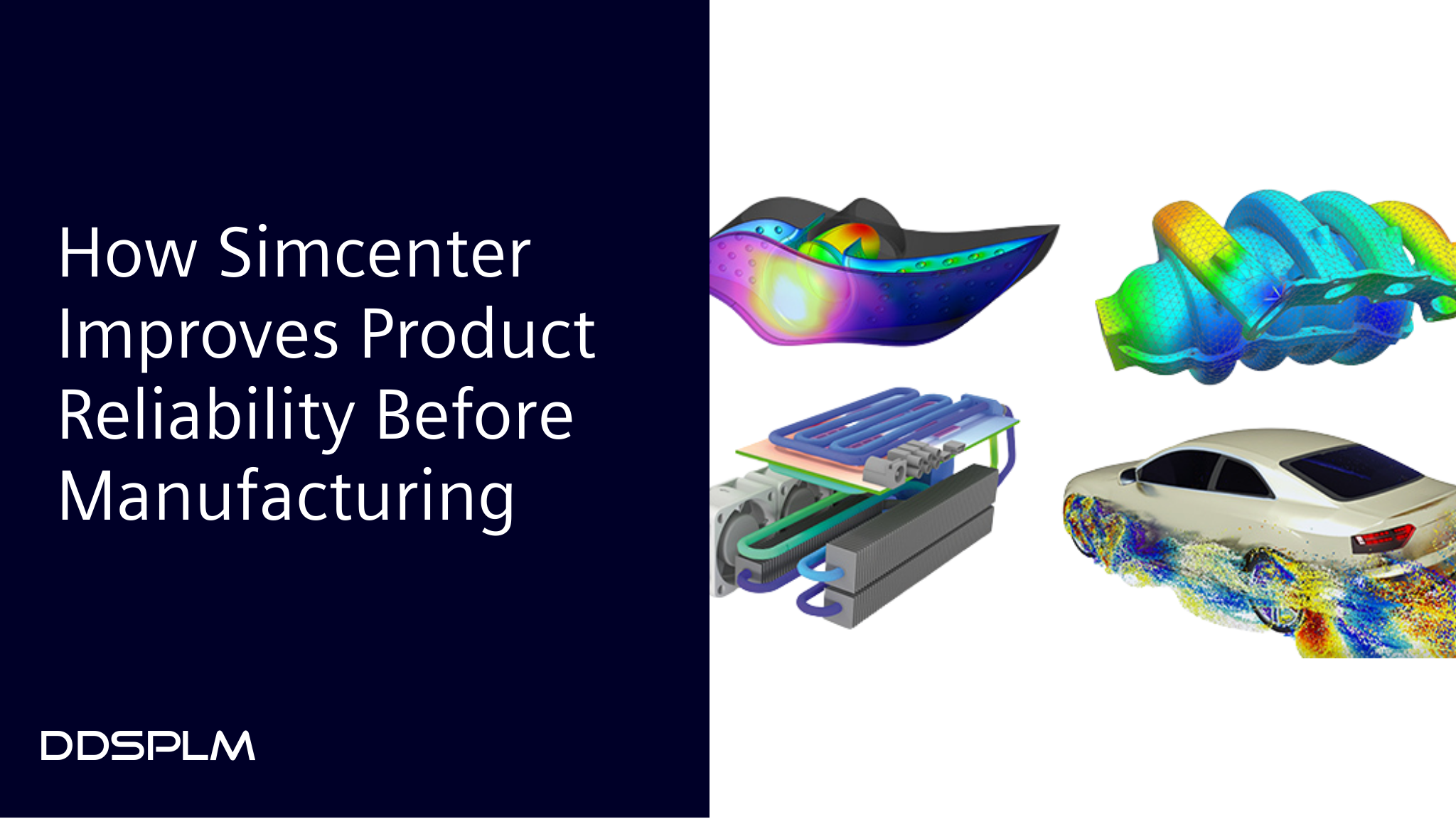
In manufacturing, a single failure can incur costs exceeding those of an entire design cycle.
- An overheated battery pack.
- Unexpected vibration.
- Premature fatigue failure.
Now consider this:
What happens if all these questions might be identified before the very first prototype is created?
That is where Simcenter is the game changer in product development.
The Significance of ensuring Reliability during the Design.
In the past, many manufacturers follow the following order:
Design → Prototype → Test → Fail → Redesign → Repeat
This methodology results in:
- Extended development timelines
- Increased costs for prototypes
- Delayed product launches
- Dissatisfaction among customers
- Claims under warranty
This methodology results in:
· Long development cycles.
· High prices of prototypes.
· Delayed product launches
· Customer dissatisfaction.
· Claims under warranty
The reactive approach is no longer feasible in the modern competitive environment in the automotive and industrial spheres.
The reliability should be built in not tested subsequently.
What is Simcenter?
Simcenter, developed by Siemens Digital Industries Software is an advanced simulation portfolio that is built on structural, thermal, CFD, motion and system simulations and brings them together to integrate into a single setting.
It also allows engineers to make predictions in a digital manner of actual performance in the real world before the manufacturing process starts.
In simple terms:
Simcenter allows testing to be conducted virtually before investing in the real world.
The way Simcenter improves the reliability of products.
Let us analyze it further.
1. The first load test is the Structural Strength and Fatigue Prediction.
Under exerted load, will the component demonstrate failure?
How long will it last in cyclic stress? 5 Years.
Simcenter performs high-end finite element analysis (FEA) in order to:
Expect areas of concentration of stress Examine fatigue lifespan Verify the capability of bearing loads Enhance durability
This counters unexpected failure in automotive brackets, housings, shafts and welded assemblies.
2. Thermal validation - The thermal performance ensures the temperature stays within a specified range.
Thermal Performance Checking - Thermal performance makes the temperature remain within a given range.
One of the most serious reliability problems is overheating - it is especially important in EVs, electronics, and industry devices.
Simcenter will help in the work of engineers:
· Evaluate heat dissipation
· Study airflow patterns
· Optimize cooling systems
· Prevent thermal runaway
Instead of finding out about overheating during the testing, you would deal with it in the design.
3 - Vibration & NVH Analysis
The uncontrolled vibrations cause noise, unpleasant experiences, and irreparable damages in the long-run.
Simcenter detects:
· Natural frequencies
· Resonance hazards
· Noise origins
· Problems of dynamic response.
This ensures more smooth, quieter and durable products.
4 - Multi-Physics Simulation
The conditions in the real world are complex.
Products undergo combined:
· Thermal stress
· Structural load
· Fluid interaction
· Motion dynamics
Simcenter unites these effects in a unified interconnected simulation environment - a more realistic and
reliable validation process.
Business Impact in practice- Manufacturing SMEs.
When design is factored in reliability, manufacturers can obtain:
Reduction in development cycles by a quarter to half.
The reduction of the number of physical prototypes up to 30 percent.
Reduced warranty and field related costs.
An expedited time-to-market
Increased levels of customer trust.
Most importantly:
You move on to the reactive problem-solving to the proactive engineering excellence.
Interactive Check: Is Your Product really Reliable?
Take into consideration the following questions:
Are errors found in customer operation?
Are preliminary versions exceeding budget?
Is it common and late in the process that design changes occur?
Is there uncertainty in the performance of the performance under thermal or vibration conditions?
In case the response to any of these questions is yes, then the simulation-based reliability can have a big impression.
The design validity to the Digital twin.
Simcenter also enables more expansive Digital Twin strategy - connecting design intent and real performance data.
It creates a flowing workflow when it is combined with CAD and PLM systems:
Design -Simulation -Manufacturing - Lifecycle Feedback.
This integrated engineering approach will ensure that reliability is a concept that is not exclusive to the design stage - it is a concept that is carried throughout the product lifecycle.
The Bottom Line
Reliability is no longer an option.
It has evolved to be a competitive requirement.
Firms which practice early simulation:
· Accelerate innovation
· Reduce risks
· Launch with confidence
· Defend their brand reputation.
Whether simulation increases reliability is not the question.
The critical question is:
Do you have the ability to develop products without justifying them digitally?